How Hot Is A Sauna Supposed To Be? The Ideal Temperature Explained
How hot are saunas supposed to be? The ideal temperature range for a proper sauna session is 150°F to 195°F. At these heat levels, your body can effectively relax muscles, improve blood circulation, and eliminate toxins through sweating – delivering all the classic sauna benefits.
What is the sauna experience like? The sauna experience depends on your personal preference and the type of sauna you use—traditional, infrared, or steam. Each sauna type offers its own specific therapeutic benefits.
Understanding infrared sauna temperature ranges will help prepare you to make the most of your time in the sauna. Relax after a stressful day or complement your health regimen.
How hot are saunas supposed to be? Knowing this transforms your experience! Discover the perfect temperatures for different sauna types—from traditional to infrared—and learn expert-approved techniques to maximize benefits safely. Visit us now to master your sauna sessions.
How Hot Are Saunas Supposed to Be? The Ideal Temperature Range
Knowing the ideal sauna temperature range will help you sauna more effectively and get the most out of it. Typically, a sauna should be 150°F to 200°F (65°C to 93°C). Most users tend to find a comfort zone between 170°F and 190°F (77°C and 88°C).
How hot are saunas supposed to be for beginners? If you’re unfamiliar with sauna use or have health issues, start at 150°F (66°C) for a gentler introduction. This lower end of the ideal sauna temperature range enhances relaxation while still promoting benefits like improved circulation and stress relief—key considerations when determining how hot your sessions should be.
1. How Hot Are Saunas Supposed to Be? Defining Traditional Finnish Standards
Typical Finnish traditional saunas usually go up to around 194°F (90°C). These saunas continue to be culturally important to Finland and can be a backdrop for wellness and tranquility.
Often, they don’t create their heat and steam through heated rocks. This combination creates a relaxing experience that makes it the most popular type of sauna. That unique combination of extreme heat and low humidity creates a deep, cleansing sweat that our users describe as not only deeply cleansing but relaxing and invigorating.
2. How Hot Are steam room Supposed to Be in Celsius?
Infrared saunas work at a much lower temperature, in the range of 120°F and 150°F (49°C to 65°C). The far infrared rays used by an infrared sauna penetrate deeper into the skin providing therapeutic benefits without the extreme temperatures experienced in traditional saunas.
Infrared saunas are more attractive to individuals who are sensitive to heat, allowing them to enjoy the experience in a safe, comfortable, and effective manner.
3. Understand Steam Room Settings
Steam saunas have very high humidity and cooler temperatures, usually between 100°F to 120°F (38°C to 49°C). The added moist atmosphere has the double duty of promoting relaxation while helping to keep the skin hydrated.
Unlike dry saunas, steam saunas provide a different experience that many people find relaxing and revitalizing.
4. Celsius Conversion: How Hot Are Saunas Supposed to Be Globally?
Learning how to convert sauna temperatures is handy for sauna users around the world. For example, 180°F is roughly the equivalent of 82°C.
Knowing both Fahrenheit and Celsius will guarantee the best sauna experience, no matter where you are.
5. Reddit Discussions on Sauna Heat
When Redditors discuss how hot are saunas supposed to be, polls show 43% prefer 150-170°F, while 32% opt for 170-195°F—highlighting how ideal temperatures depend on goals (relaxation vs. detox).
Participating in these social media communities lends a unique perspective and ideas on ways to maximize sauna experience and benefits.
Why Saunas Matters for Health
How hot are saunas supposed to be to maximize benefits? Sauna temperature critically impacts both health results and enjoyment, as proper heat (150-195°F for traditional saunas) triggers immediate sweating—your body’s natural detox and relaxation response. This therapeutic sweating, which begins the moment you enter, explains why how hot saunas are supposed to be isn’t arbitrary; it’s scientifically tuned to activate physiological benefits without compromising safety.
This process helps to wash out the toxins accumulated on your skin and improves its overall look. For a traditional sauna, we recommend a temperature of 150-195°F, and optimal health benefits occur at a range of 155-175°F.
Health Benefits at Different Temperatures:
Conducting sauna sessions at these temperatures has been shown to improve cardiovascular health. This can result in increased circulation and reduced blood pressure. In addition to enhancing the experience, various temperatures provide relief from muscle and joint pain.
How hot are saunas supposed to be for infrared models? These systems operate at lower temps (100-140°F) by heating your body directly rather than the air. While milder than traditional saunas, this targeted warmth creates a deeper, more soothing experience. How hot infrared saunas are supposed to be balances comfort with efficacy—the precise temperature range maximizes detoxification through sweating while supporting immunity, without extreme heat stress
Potential Risks of Excessive Heat
That said, it’s important to understand the pitfalls of extreme heat. Extended exposure to excessive heat can result in heat exhaustion or hyperthermia. Dangerous effects from heat exposure can include confusion, dizziness, and increased heart rate.
Understanding your own heat tolerance is important. You might be completely fine at 180°F, and others may not be able to handle it. Of course, always be aware of how your body is reacting to avoid overheating.
How Temperature Impacts the Experience
What might surprise you is that temperature plays a critical role in relaxation. A comfortable environment provided by the proper temperature helps support focus and mental acuity. Finding the temperature that feels best will require some experimentation.
With our wide selection, you get to decide if you want the dry, enveloping heat of a traditional sauna or the milder warmth of an infrared sauna.
Determine Your Ideal Sauna Temperature: How Hot Is Right for You?
Finding the right sauna temperature is key to enjoying all the benefits of the sauna in comfort and style. Personal comfort is definitely the most subjective component of this decision. Begin by determining your personal sauna heat tolerance. Most people discover that their sweet spot sauna temperature is in the range of 155°F to 195°F.
That’s a bad reason to shy away from sauna trial and error. For example, if you have a preference for the more subtle warmth of an infrared sauna (which is usually 100°F – 125°F), you may need to adjust your expectations accordingly.
Consider Personal Tolerance Levels
Having a sense of how your body reacts to heat is very important. Start with lower temps, raising them as you become accustomed. Your body’s ability to withstand heat will depend on factors like age and fitness level.
For instance, younger people may enjoy hotter temperatures, whereas older adults should stick to lower temperatures. Even if you’re striving for a higher sauna temp, always listen to your body—if you start to feel dizzy or uncomfortable, it’s wise to reduce your temperature.
Account for Age and Health Conditions
Age plays a major role in how much heat you can tolerate. If you’re an older adult or have other particular health conditions, you should aim for the lower end of the spectrum—ideally under 155°F.
How hot are saunas supposed to be for your specific needs? A healthcare professional can provide personalized guidance on ideal temperatures and session lengths. Whether you’re new to saunas or managing health conditions, their advice ensures you reap benefits while staying safe, because how hot your sauna should be depends on your unique physiology and goals
Adjust for Room Size and Insulation
Heat distribution is determined by the size of your sauna room. Though smaller saunas have the advantage of heating up quickly, taking time to heat the preferred space can be a concern for larger saunas.
That’s why proper sauna insulation is so important for keeping the ideal level of heat. Keep a close eye on the temperature fluctuations inside your sauna so that you can determine where the best, most comfortable area is.
Safe Sauna Practices
Saunas are a great way to quickly relax and energize. To ensure you get the most out of your experience, understanding and adopting safe practices is key. Here are a few important practices to help you get the most out of your sauna sessions while keeping them safe and effective.
Gradual Temperature Acclimation
If you’re new to saunas, begin by starting at lower temperatures, closer to 150°F. This gives your body a chance to adjust slowly. Once you’re comfortable, begin to raise the temperature slowly.
For maximum benefits, try to reach levels of at least 195°F! This gradual acclimation promotes deeper relaxation and has been shown to promote a variety of health benefits, including improved circulation and stress relief. Most importantly, listen to your body.
If you feel anything unusual or uncomfortable, stop and re-evaluate how to proceed.
Hydration: Before, During, and After
Hydration is key, no matter where you go. Consume fluids. Drink a glass of water before entering the sauna to avoid dehydration.
Beyond that, it’s always a good idea to drink water before, during, and after your sauna session so your body stays properly hydrated. After you sauna, be sure to rehydrate lost fluids to optimize recovery.
Neglecting hydration can lead to dizziness, headaches, and an overall unpleasant experience, detracting from the benefits of your sauna use.
Listen to Your Body’s Signals
Be mindful of what your body is telling you at every stage of a sauna session. Signs of physical distress, such as dizziness or profuse sweating, signal that you should step outside for a moment.
Keep in mind that everyone’s heat tolerance is different, so just because you’re acclimated doesn’t mean your friend already is. Consider changing your sauna routine to find a balance unique to you and how you prefer to feel.
Take Breaks When Needed
If you’re in for a longer session, getting out and taking regular breaks is essential. Leaving the sauna and going to a cooler space allows your body temperature to stabilize.
Focusing on comfort instead of duration will set you up for a much greater experience. Quick pauses might even increase the positive effects of your sauna session, helping you get more from it and still have more time to relax.
Maximize Your Sauna Session
To unlock all the possible health benefits a sauna can provide, it’s important to get the most out of your sauna sessions. By creating a routine and having clear intentions, you’ll be able to deepen your experience and health benefits. Through regular sauna use, you can achieve greater relaxation, better circulation, and an overall improved sense of well-being.
Optimal Session Duration
If you’re new to the sauna, a shorter session of 10 to 15 minutes is best. Once you feel more at ease, you can slowly start to work your way up to 20 or 30 minutes.
It turns out that shorter, more frequent sessions, even as little as three times a week, are just as effective as spending longer sessions in the sauna. Play around with your time to find what works best for you.
You may feel uncomfortable or dehydrated, so pay close attention and listen to your body.
Frequency for Best Results
How hot are saunas supposed to be to achieve these benefits?** For optimal results at 2-3 sessions weekly, maintain proper sauna temperatures (150-195°F for traditional, 120-150°F for infrared). This consistent heat exposure boosts cardiovascular health, deep relaxation, and skin rejuvenation, proving how hot your sauna sessions should be directly impacts their effectiveness.
Your body will be better able to adapt and reap the rewards of a consistent routine that you establish. As always, practice balance—make sure to give your body plenty of time to rest and recover in between sessions.
Post-Sauna Routine
After your sauna, hydrate with water to replenish lost fluids, and consider a cool-down period of 5 to 10 minutes. Some gentle stretches can go a long way in relaxing your muscles even more.
Showering post-sweating is not only refreshing but critical for skin health by washing away sweat and unclogging pores. Finally, be sure to debrief and contemplate your sauna experience.
Reflect on what felt good and what you’d like to work on for your next sauna session.
Sauna Types and Their Benefits
All sauna varieties have specific benefits that appeal to different sauna users’ preferences and wellness goals. Knowing which types to choose can improve your sauna experience, no matter where you are—at home or in a spa. Here are some of the specific benefits associated with Finnish, infrared, and steam saunas.
Finnish Sauna Advantages
Traditional Finnish saunas have long been celebrated for their health benefits. The heavy-duty heat in Finnish saunas, the typical high temperature is typically between 150°F and 195°F. This deep penetrating heat increases circulation, relieving tension and pain in muscles and joints.
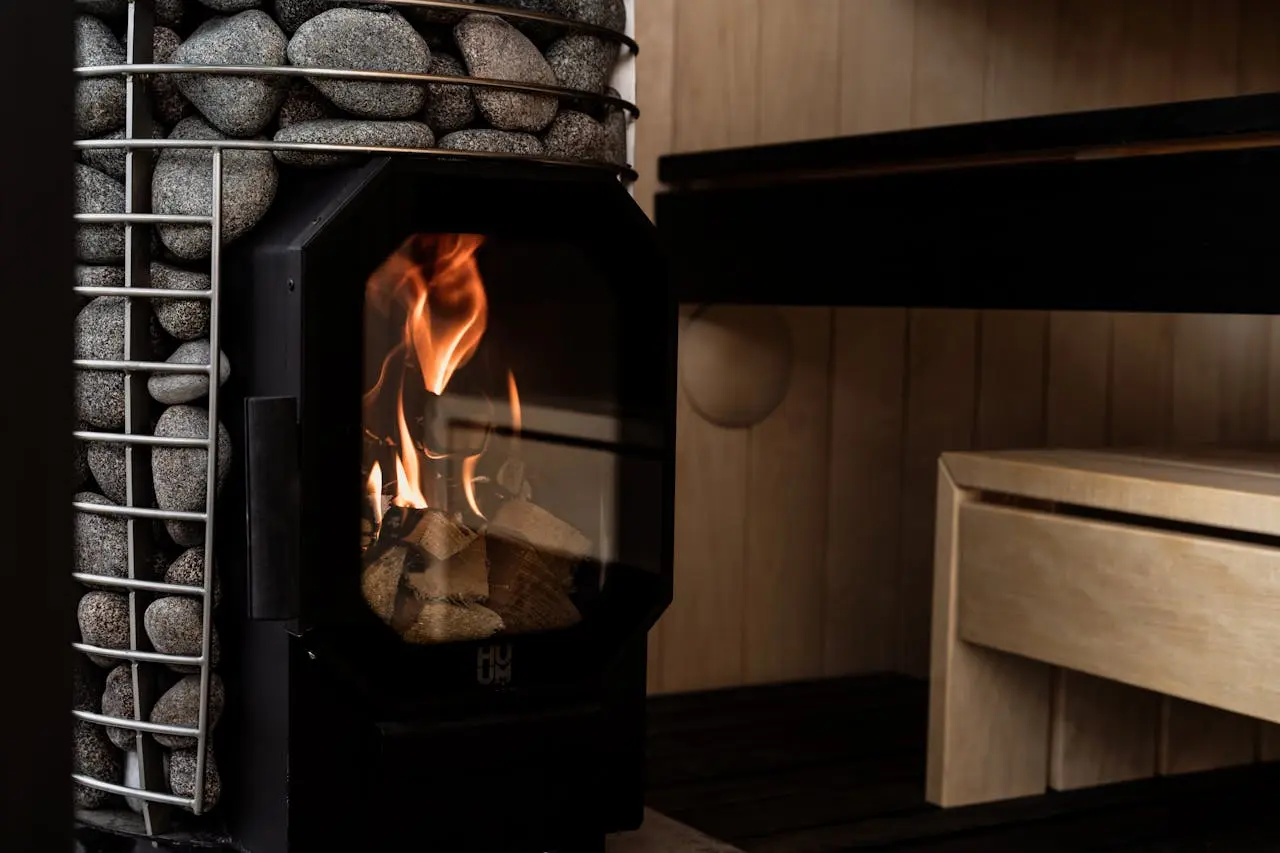
The cultural importance of sauna traditions in Finland focuses on social connection and relaxation, creating a full mind-body experience. Traditional approaches, like going with a sauna stove heated by wood, foster an environment that magnifies the benefits.
Those who do often discover the most profound relaxation and invigoration to be found in these practices.
Infrared Sauna Advantages
Infrared saunas are a different story. They’re a bit cooler. These types of saunas maintain their temperatures at around 120°F to 140°F.
This range of temperatures makes them ideal for those who want a milder heat experience. The deep tissue relaxation achieved in an infrared sauna can help with post-workout recovery and chronic pain relief.
Most users are looking for effective, therapeutic heat without the extreme temperatures found in commercial saunas. What they tend to find is that infrared options are ideal for their lifestyles.
Steam Sauna Advantages
Steam saunas provide distinct advantages, too. High humidity environments, usually maintained at 110°F – 120°F, improve skin health and increase hydration.
This makes them a terrific option for those wanting to prevent breakouts, fine lines, and wrinkles. The warm, humid environment can open up congested airways, making it easier to breathe, which is especially soothing for those with allergies or asthma.
The calming benefits of steam increase the relaxation experience, inviting users to relax more deeply.
How Hot Are Saunas Supposed to Be? The Humidity-Temperature Relationship
Getting to know how humidity and temperature interact with each other in a sauna is key to having a relaxing, comfortable, and effective sauna experience. The interaction between these two variables greatly affects how hot you feel while lounging in the humid air. As humidity levels increase, the air becomes heavier and holds in more heat.
This makes humidity-based saunas feel hotter than they are set to a given temperature.
How Humidity Affects Perceived Heat
Elevated humidity can further intensify the feeling of heat within the sauna. That’s because the humidity in the air stops sweat from evaporating quickly, which is how your body cools off, she explains. Worse, you’ll be many degrees hotter than the thermometer suggests.
Physiologically speaking, extreme humidity can make it harder for your body to cool itself, making the experience all-around harsher. Finding your ideal radius is important. Adjust humidity levels to discover your comfort level.
Choose your poison: drier heat or a more humid climate. Humidity is the key to improving your whole sauna experience. That’s because it lets you luxuriate in the delicious warmth.
Adjusting Temperature Based on Humidity: How Hot Should You Go?
How hot are saunas supposed to be when humidity varies?** True sauna culture prioritizes atmospheric comfort, meaning temperatures should adjust with moisture levels. In a steamy environment, increasing heat slightly (just 5-10°F) often enhances comfort, demonstrating how hot your sauna should be depends on reading the room’s conditions, not just fixed numbers.
A good rule of thumb is to drop the sauna temp by 10°F for every increase in humidity. Finding the right balance between heat and humidity makes all the difference. By paying attention to temperature and humidity, you can ensure an enjoyable sauna experience.
This will make for a fun, positive, and inspiring experience.
Monitoring and Controlling Temperature
Proper temperature monitoring and controlling in saunas is important to ensure a safe and comfortable sauna experience. Say the sauna is too hot or too cold. The ideal sauna temperature is generally between 150°F and 195°F for most users, depending on preference and sauna style.
How hot are saunas supposed to be for optimal therapy?** Staying within the 150-195°F range maximizes benefits like muscle relaxation and circulation. To monitor this precisely, use digital thermometers (favored for fast, accurate readings) or traditional alcohol thermometers, because how hot your sauna is matters more than the setting on the dial.
Routine inspection and calibration of sauna thermostats is an effective way to make sure that they are giving accurate readings. The easiest way to calibrate is to compare the reading of your thermometer with an accurate, reliable counterpart. If you do find a difference, you should recalibrate or replace the thermostat.
The sauna temperature sensor may experience common issues such as moisture or debris accumulation, which can lead to inaccurate readings. Resolving these issues usually requires cleaning the sensor or repositioning it to get a better temperature reading. If you want your sauna to run at its best, scheduling regular maintenance checks is another important factor to keep in mind in maintaining consistent temperature control.
Calibrating Thermostats and Sensors
First, turn the sauna off and allow it to cool completely. Use a sauna-safe thermometer to check the intensity of the heat inside the sauna before changing the thermostat setting. If you find that temperature ranges widely, then it’s time to investigate possible sensor problems.
Routine monitoring and maintenance allow us to identify these issues before they become a danger or major inconvenience, ensuring safety and comfort. Specific temperature settings are important for their effectiveness. Too high a setting could lead to overheating, whereas too low could result in not experiencing the benefits you’re seeking.
Ensuring Accurate Temperature Readings
For the sauna, getting a true temperature reading is the top priority for safety. To test the accuracy of a thermometer, compare it with a second trusted thermometer to guarantee consistent results. If you find out your equipment is broken, quickly replacing or repairing it would go a long way towards keeping temperatures stable.
Using a sauna with erroneous temperature readings puts you at risk for all the dangers associated with sauna use, such as overheating or other heat-related illnesses.
Common Misconceptions: How Hot Are Saunas Supposed to Be?
Misconceptions about sauna temperatures abound, and many believe that the more heat you get, the better the health benefits. This misconception can cause embarrassment, and it can be dangerous. Clearing up common sauna temperature myths is the first step in safely and effectively enjoying all of the health benefits of this relaxing practice.
Debunking Myths: How Hot Are Saunas Supposed to Be?
Which brings me to one major misconception that high heat is critical to powerful sauna therapy. Though increased heat levels may support increased sweat production, they don’t necessarily help with detoxification or relaxation.
Scientific evidence supports the use of moderate temperatures, typically in the range of 150°F to 195°F, to enjoy health-promoting benefits. They accomplish this without inflicting the pain or dangers associated with severe heat.
Coming into the sauna with too much heat exposure can overwhelm your body, causing dehydration, overheating, and other harmful effects. What’s most important is listening to your body and identifying when the conditions are too high in temperature for you.
By choosing a moderate temperature, you can still enjoy a longer session and never feel as though your health is at risk.
Safety First: How Hot Should Saunas Be for Risk-Free Use?
Safety is usually top of mind for sauna users, especially when it comes to temperature. Once you start sweating, it’s important to stay hydrated to keep your sauna experience safe!
If you’re a beginner, keep your sessions to 15–20 minutes. Learning to listen to yourself and to understand your own limits is extremely important. For example, if you are pregnant or have a serious underlying health condition, you should check with your physician before using a sauna.
Promoting open communication and understanding of safety practices creates a supportive environment where all sauna users can thrive. By sharing your experiences and tips with other sauna goers, you not only help create a more close-knit community, but you’ll improve your own sauna experience as well!
Maintaining Equipment: How Hot Are Saunas Supposed to Be for Longevity?
Proper maintenance of sauna equipment will go a long way in providing a safe, enjoyable experience. Like any other fixture in your home, sauna maintenance takes a little effort to make sure your sauna is at peak performance. A little time spent on maintenance will greatly prolong the life of your sauna.
It will improve your relaxation experience, too!
Impact of Temperature Fluctuations
Finding the right temperature shift can make all the difference in your sauna experience. A steady heat level is important for a comfortable sauna experience, usually between 150°F and 195°F. As it turns out, rapid physiological changes can be quite uncomfortable and make the sauna less effective.
For instance, if your sauna heats up too quickly or cools down unexpectedly, it disrupts the calming environment you seek. Professionally maintaining sauna equipment and regularly monitoring and regulating temperatures help to create a peaceful environment.
This practice mitigates dangers, such as overheating and insufficient heat exposure, which may occur due to sudden temperature fluctuations.
Best Practices for Longevity
Setting up a regular maintenance routine can help extend the life of your sauna equipment. Consistent upkeep includes regularly wiping down surfaces and inspecting for items like lint or dust to avoid clogging filters. This prevents damage and supports sanitation.
Continuing to utilize these devices correctly by following the manufacturer’s instructions for maintenance and operation is just as critical. These guidelines almost always encompass the minimum required specifications that will guarantee your sauna is performing to its highest potential.
Purchasing long-lasting sauna materials and accessories is worth the investment since you save that money over time. They wear down less easily, ensuring your sauna equipment stands the test of time.
For instance, using high-quality wood can avoid warping and keep a nice smell while in use.
Conclusion
Whatever you choose, saunas can provide a wonderful tool to promote relaxation and overall health. Getting that temp just right is key to a great experience. Consider 150°F to 195°F as the hot sweetspot in your sauna experience. One size doesn’t fit all in terms of comfort, so listen to your body and adapt accordingly. As always with any type of heat exposure, prioritize safety and listen to your body. With regular sessions, you’ll be improving circulation and relieving stress at the same time. From traditional to infrared, each type of sauna offers distinct benefits. Manage the humidity to make the heat go farther. Dispel these common myths about sauna use to make the most of this relaxing practice. Enjoy what the sauna has to offer and incorporate it into your overall wellness routine. Get started reaping all the benefits saunas can provide today.